

Outcome
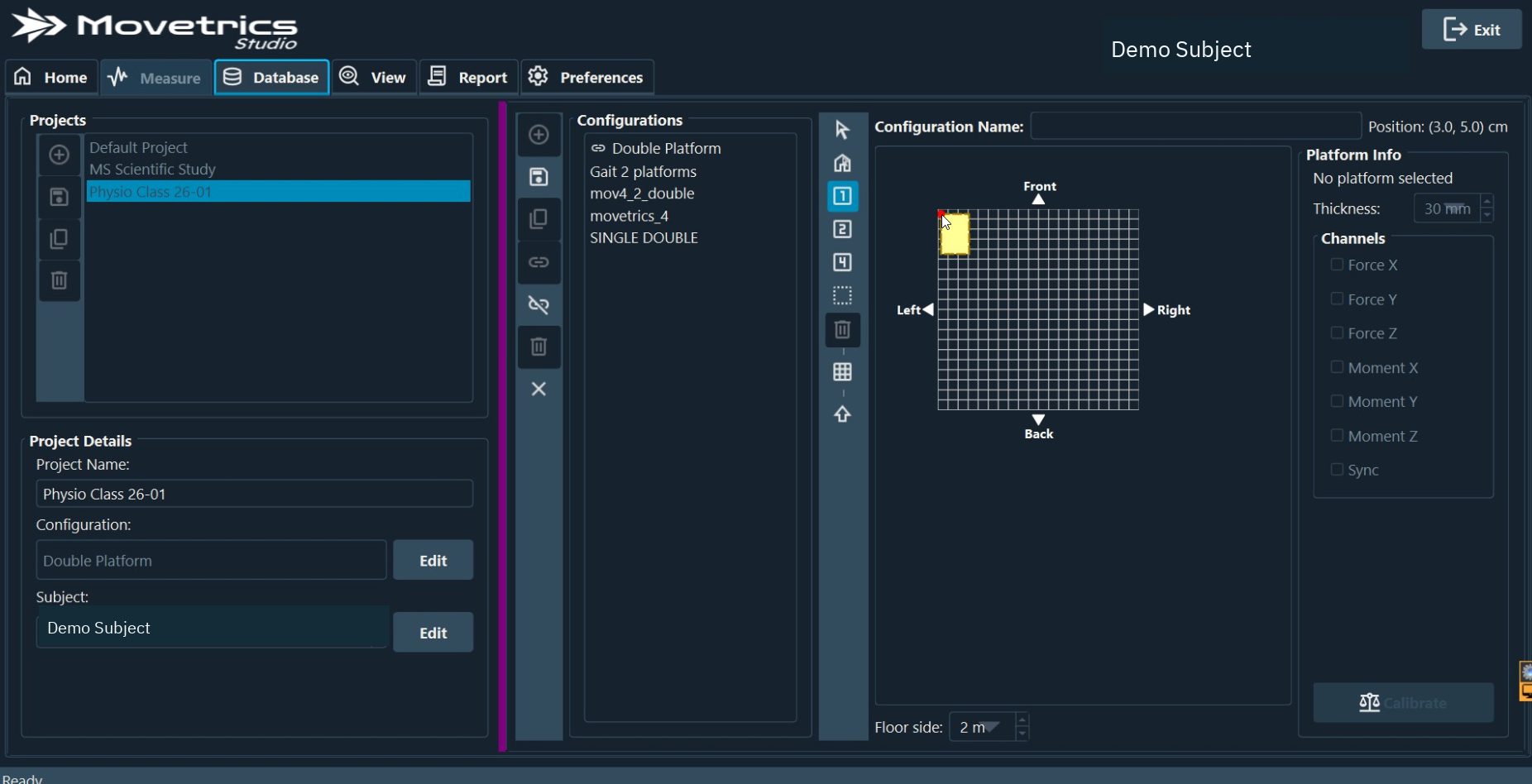
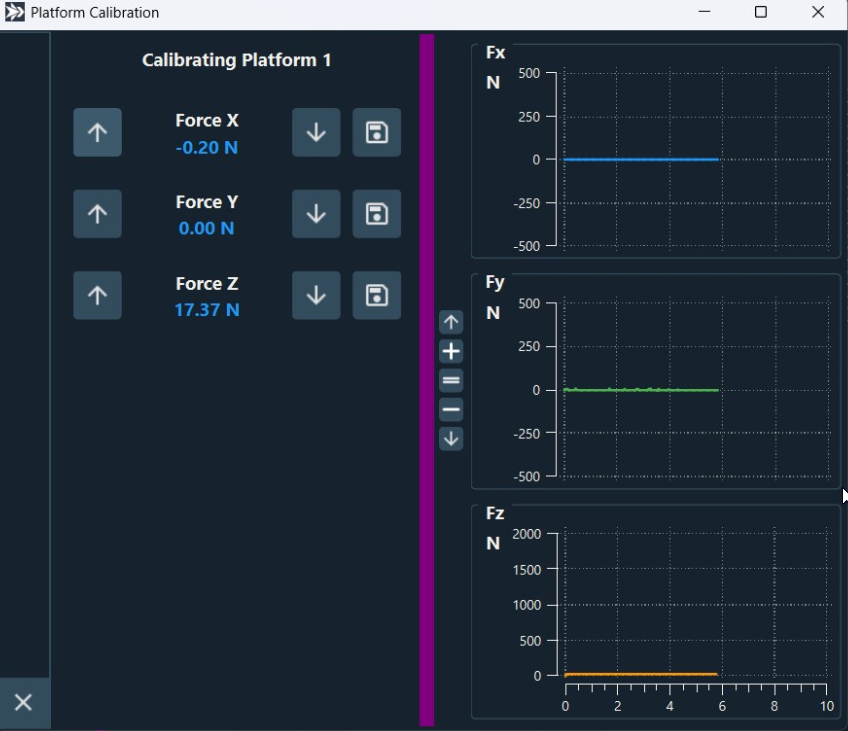
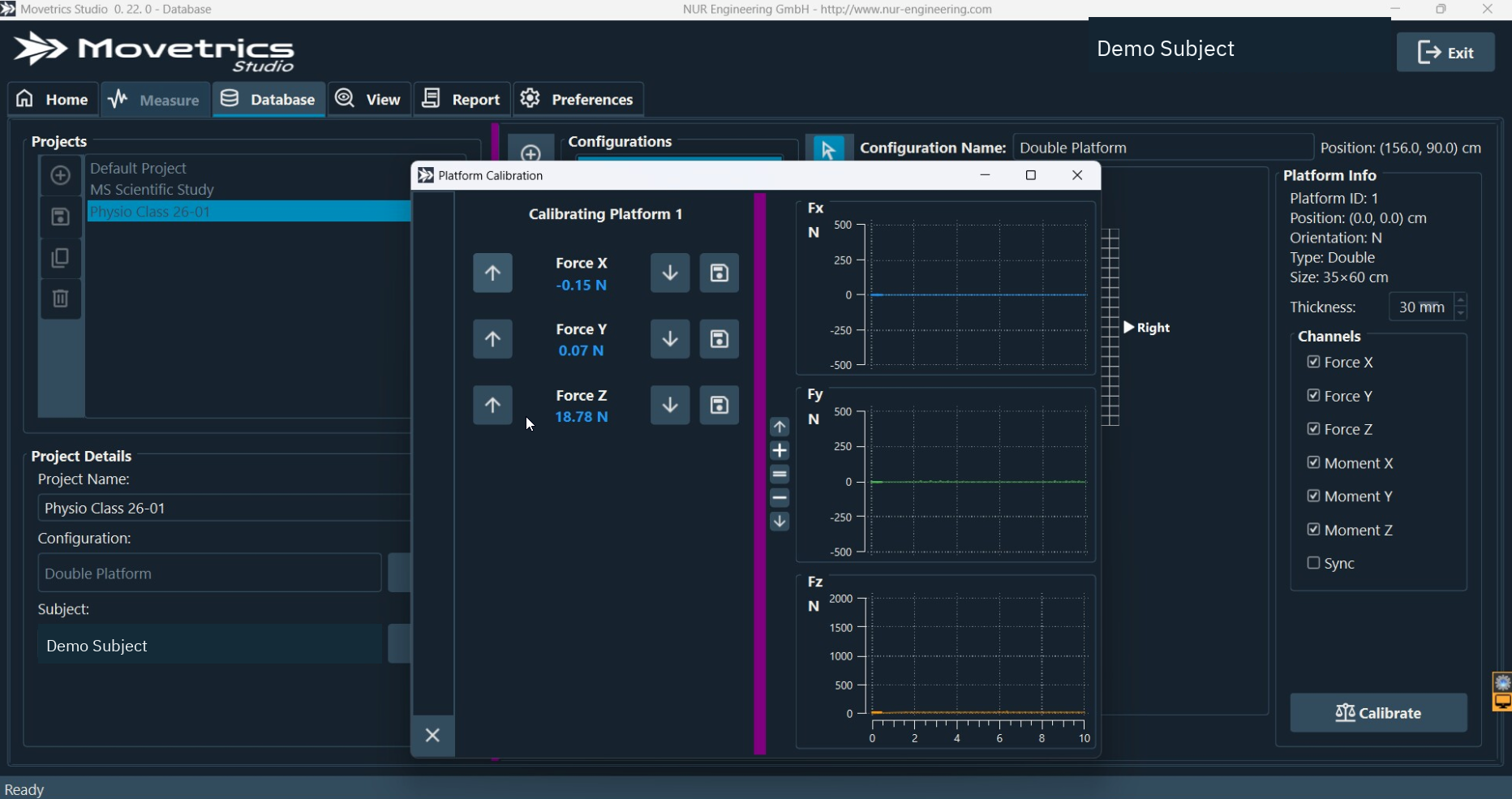
Perform routine tare correctly and recognise that the visible Fz calibration interface is a separate administrator-controlled function.
Applies to
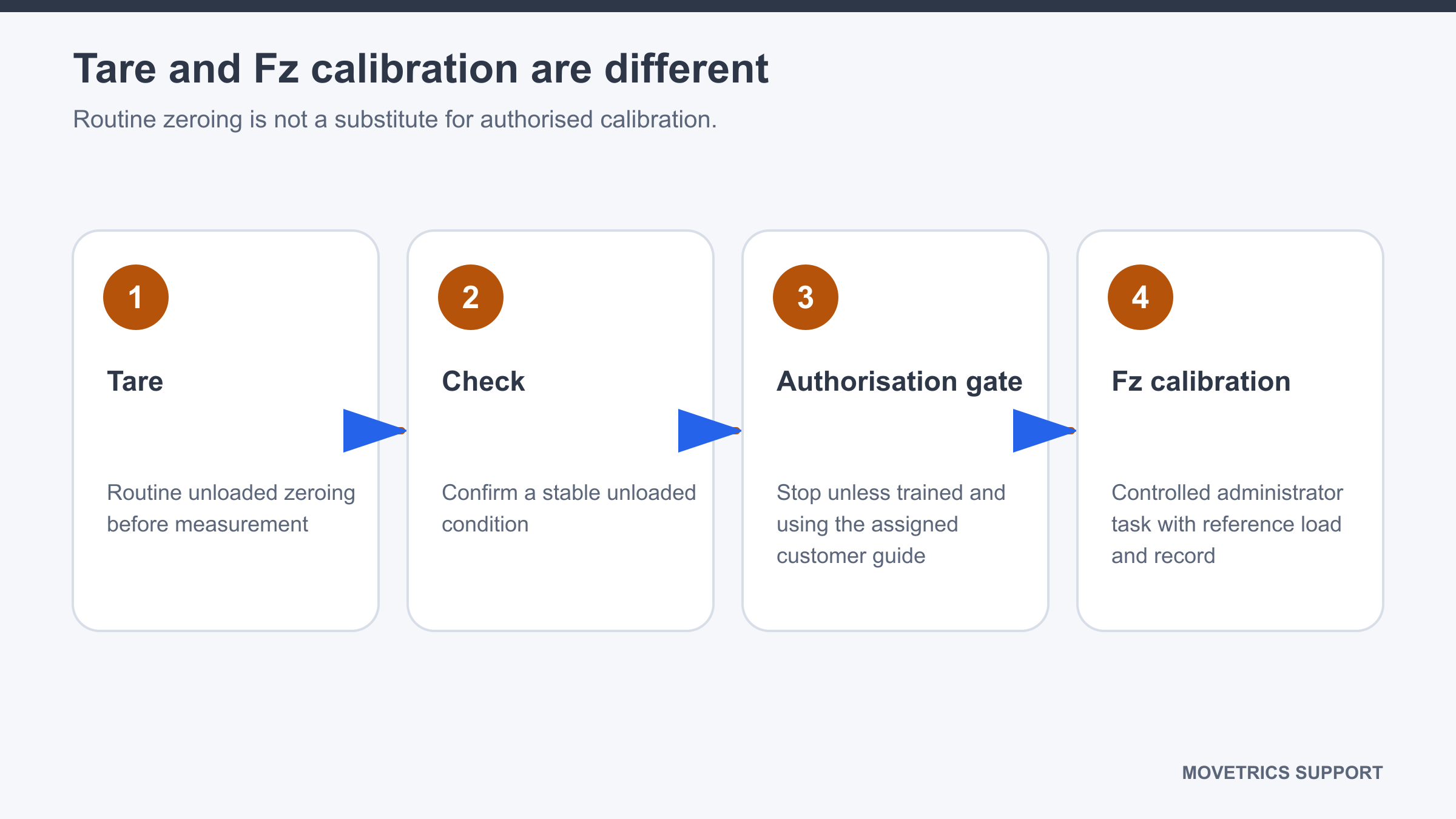
Tare is part of normal measurement operation. Fz calibration is a separate controlled procedure for trained customer administrators who have written authorisation for the specific system.
Before you begin
- Confirm the plates are stable, correctly connected, and completely unloaded.
- Do not open Calibrate unless you are an authorised administrator following the current controlled procedure.
Steps
- Understand tare: it establishes the unloaded zero immediately before a measurement. It does not replace calibration.
- Start the selected examination and wait for the tare prompt.
- Remove the person, equipment, cables, hands, and any other contact from every force plate.
- Keep the plates untouched until Movetrics Studio confirms that tare is complete.
- Continue the measurement only after the wizard asks the person to step on or move into position.
- If tare repeatedly fails, stop the examination and check for contact, movement, cable tension, contamination, or an unstable plate.
- Understand Fz calibration: it checks or adjusts the vertical-force response using controlled equipment, records, acceptance limits, and failure handling.
- Perform Fz calibration only when your authorisation, controlled instructions, required equipment, and recording form are all available. The public support guide intentionally does not contain the detailed values or procedure.
- Leave all other calibration work to an authorised Movetrics specialist.
You should now see
Routine tare completes with unloaded plates. Any need for Fz calibration is clearly separated and assigned to an authorised person using a gated procedure.
Stop or repeat when
- Anything touches or pulls a plate during tare.
- Tare repeatedly fails with stable, unloaded plates.
- Standing readings remain implausible after a clean tare.
- The Fz calibration instruction, authorisation, equipment, acceptance limits, or record is missing.
If it does not work
Do not invent a calibration load, tolerance, or sequence. Preserve the system state, note the affected plate and observed reading, and request the controlled procedure or specialist review.